Both routes end at Machu Picchu. That is where the similarities stop.
The Inca Trail vs Salkantay Trek debate comes down to what you want from the journey itself: historical depth and a legendary path, or raw Andean scenery and fewer restrictions. Neither is objectively better. But one will suit your situation more than the other, and the difference matters before you commit four or five days to hiking at high altitude in Peru.
Overview: two routes, one destination
The Inca Trail is the original trekking route to Machu Picchu, built by the Inca civilization and following a network of stone paths, tunnels, and ancient ruins through cloud forest and high mountain passes. The classic version takes four days and three nights.
The Salkantay Trek is a longer, wilder alternative. It passes beneath the Salkantay glacier (6,271 meters), drops into subtropical jungle, and converges on Aguas Calientes from a different direction. The standard version takes five days and four nights.
Both depart from the Cusco region and require physical preparation. Neither is a casual walk.
Difficulty comparison
Inca Trail
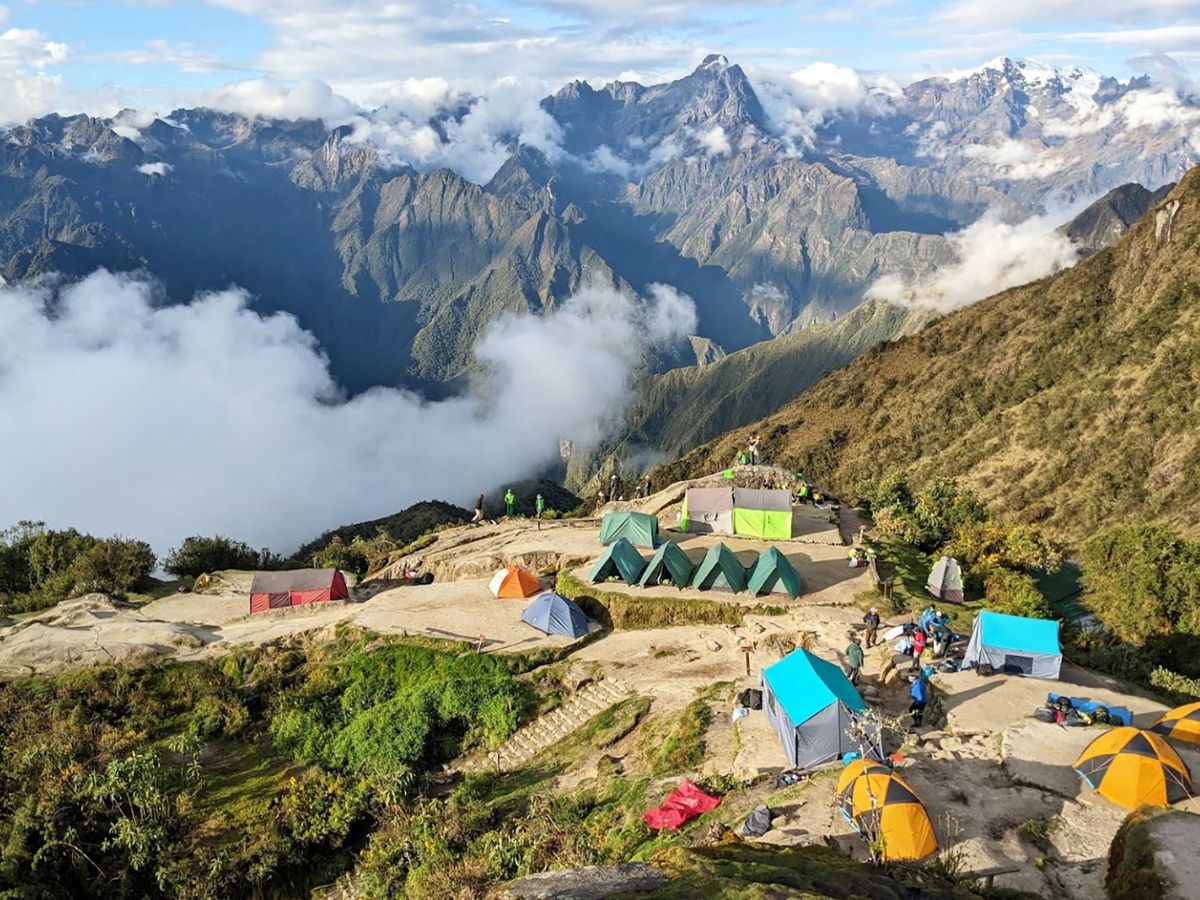
The hardest section of the Inca Trail is Day 2, which climbs to Dead Woman’s Pass at 4,215 meters. At that altitude, your lungs work harder than usual and your legs feel heavier than they should. After the pass, the trail descends through cloud forest before another ascent to a second pass at 3,998 meters. Total elevation gain on Day 2 is around 1,200 meters.
The terrain is mostly original Inca stone steps, which look dramatic in photos but wear on your knees over hours of descent. Poles are strongly recommended. By Day 3, the altitude drops and the hiking becomes more manageable.
Overall difficulty: moderate to challenging. Most people with a base level of fitness complete it without major issues, provided they acclimatize in Cusco for at least two to three days beforehand.
Salkantay Trek
The Salkantay Trek is longer and involves more total elevation change. The highest point, Salkantay Pass, sits at 4,630 meters, which is 400 meters higher than Dead Woman’s Pass. The first two days are the hardest, with long ascents in cold, exposed terrain near the glacier.
From Day 3 onward, the route descends into the Cusco jungle zone, passing through coffee and coca plantations in a warmer, greener landscape. The final stretch into Aguas Calientes is relatively gentle.
Overall difficulty: challenging. The altitude and multi-day cumulative fatigue make this a tougher undertaking than the Inca Trail for most people.
Scenery and experience
What you see on the Inca Trail
The Inca Trail is primarily a cultural and historical experience. Along the route, you pass through a series of archaeological sites, including Llactapata, Runkurakay, Sayaqmarka, and Phuyupatamarca. These are not replicas or reconstructions. They are original Inca structures, some still partially intact after 500 years.
The approach to Machu Picchu through the Sun Gate (Intipunku) at sunrise is one of those moments that tends to stay with people. You arrive at the citadel through the same path the Incas used. That context changes how the place feels.
The cloud forest sections are also genuinely beautiful, with orchids, hummingbirds, and moss-covered trees at lower elevations.
What you see on the Salkantay Trek
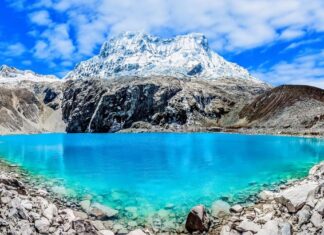
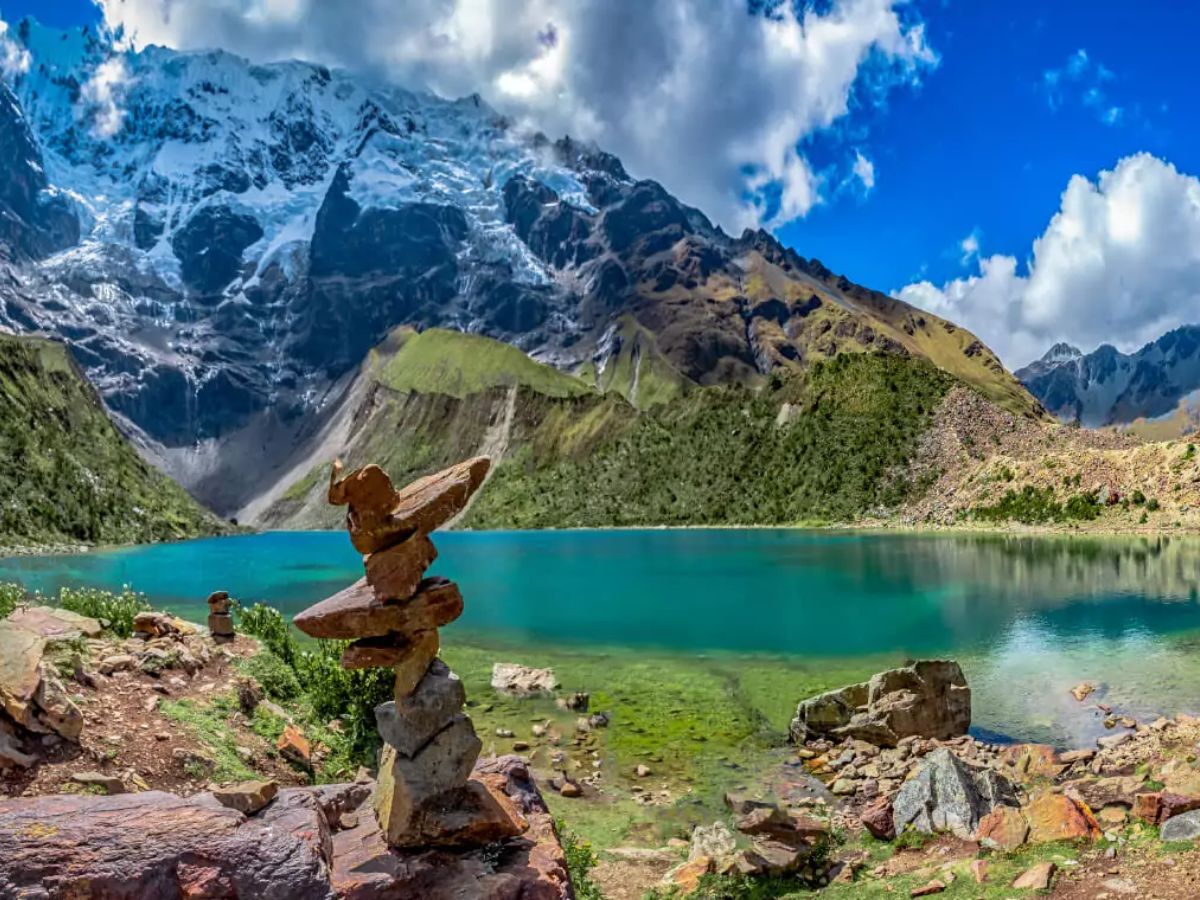
The Salkantay Trek delivers a different visual register. The glacier up close on Day 2 is striking in a way that has nothing to do with history. The turquoise glacial lakes, the stark high-altitude plateau, and the transition from freezing alpine terrain to warm subtropical jungle within a single route create a sharp contrast you do not get on the Inca Trail.
The archaeological content is minimal. You are not walking past ruins; you are walking through geography. For some travelers, that is exactly the point.
Permits and regulations
Inca Trail permits
This is the most important practical difference between the two routes.
The Inca Trail is regulated by the Peruvian Ministry of Culture. A strict daily limit of 500 people (including guides and porters) is enforced. In practice, this means permits sell out months in advance during high season (May through September). In peak months like June and July, permits for the following year can sell out before December of the current year.
You cannot do the Inca Trail independently. A licensed tour operator must handle your booking, and all trekkers must be registered with a certified guide. This is both a restriction and a guarantee: the trail is managed, monitored, and maintained.
Bottom line: If you want to hike the Inca Trail, you need to plan well ahead. Contact a cusco travel agent at least 4 to 6 months before your intended travel date, especially if you are targeting the dry season.
Salkantay Trek permits
The Salkantay Trek has no permit quota. You can book it on shorter notice, and independent trekking is technically possible, though the terrain and altitude make a guide a smart choice regardless.
This flexibility is a major practical advantage. If you decide to visit Peru with less than three months’ notice, the Salkantay is usually still available. Most cusco travel agents can confirm a Salkantay itinerary within days rather than months.
Cost comparison
The Inca Trail is more expensive, largely because of permit fees and regulatory requirements.
Inca Trail (4 days / 3 nights):
- Permit fee: approximately $200-250 USD per person
- Tour operator cost (including guide, porter, meals, camping): $600-900 USD per person depending on group size and service level
- Total: roughly $800-1,100 USD per person
Salkantay Trek (5 days / 4 nights):
- No permit fee
- Tour operator cost (guide, meals, accommodation): $400-700 USD per person
- Total: roughly $400-700 USD per person
Both price ranges can vary widely. Budget operators exist for both routes, and the gap between a $400 Salkantay and a $700 Salkantay reflects real differences in accommodation, food quality, and group size. The best tour options are rarely the cheapest ones listed online, particularly on multi-day treks where meal quality, guide expertise, and equipment make a tangible difference.
Which trek is right for you?
Choose the Inca Trail if:
- You want to arrive at Machu Picchu through the Sun Gate at sunrise after walking a historic path
- You are interested in Inca archaeology and want to see ruins along the way
- You can plan at least 4 to 6 months in advance
- Budget is not the primary constraint
Choose the Salkantay Trek if:
- You are booking on short notice or could not secure Inca Trail permits
- You prefer dramatic natural scenery over historical sites
- You want a longer, more physically demanding experience
- You are looking for better value without sacrificing the final destination
Practical advice for both routes
Acclimatize properly. Both treks start near Cusco or in the surrounding highlands. Arriving in Cusco and trekking the next day is a common mistake. Give yourself two to three full days at altitude before the first hiking day.
Hire a reputable operator. The quality gap between operators is significant on multi-day treks. A travel agency in cusco that specializes in trekking will provide experienced high-altitude guides, well-organized logistics, and reliable gear. This matters more on the Salkantay, where weather near the glacier can change fast.
Train before you go. Neither route is a walk in the park. Cardio fitness and leg strength make a real difference. Hiking with a weighted pack on inclines for at least 4 to 6 weeks before departure prepares your body for what the Andes will ask of it.
Pack for variable weather. Both treks involve cold nights and potentially warm days. Rain gear is not optional in the cloud forest sections. Layers work better than single heavy pieces.
One destination, two very different journeys
The Inca Trail and the Salkantay Trek both deliver Machu Picchu, but the journey itself is entirely different in character. One puts you on a historic path shaped by an ancient civilization; the other takes you through some of the most dramatic mountain and jungle landscapes in South America.
Neither is a bad choice. The question is which experience fits your timeline, budget, and what you actually want to carry with you for five days through the Andes.
See more of these guides in our blog.